This article was written by Senior Land Agents, Travis Smock and Adam Crist.
Whether you’re selling productive farmland, recreational property, or a mixed-use portfolio, how you sell can shape the final outcome just as much as what you sell. From pricing transparency and buyer engagement to competitive tension and final sale price, the auction method influences nearly every aspect of the transaction and can be just as important as choosing the right brokerage.
Auction strategy is not one-size-fits-all. It requires understanding land characteristics, local buyer pools, capital sources, and market timing. The structure selected will shape buyer psychology, urgency, and ultimately competition. At Peoples Company, we evaluate each property individually to determine which auction format creates the strongest competitive environment and aligns with the seller’s objectives. Our company has a strong track record of using every type of auction method, a deep understanding of choosing the correct procedure, and a full auction team capable of executing each option at a high level.
What Auction Methods Are Available:
Auction methods vary in structure and strategy. The most common options for land sellers include:
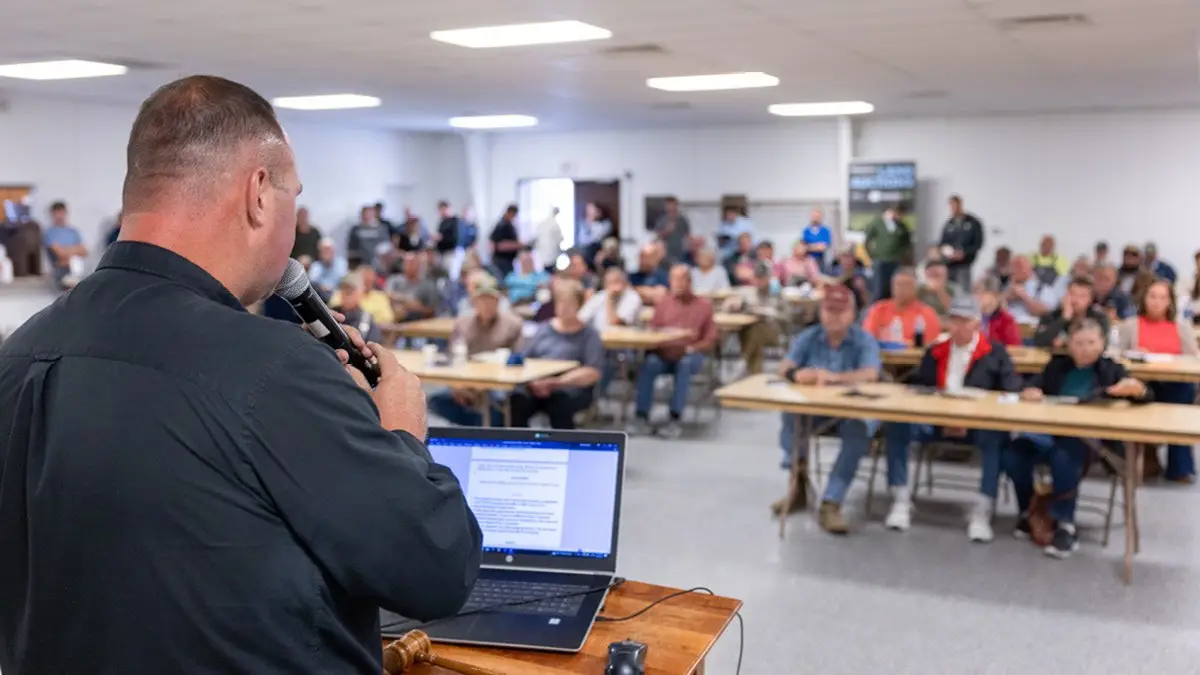
Traditional In-Person Auctions – The property is sold in a public setting, with online bidding available, on an individual tract basis.
Choice Auctions – Bidding begins with all tracts available. Winning bidders choose which tract or tracts they would like, and bidding continues until all tracts are sold. Similar to the traditional auction, these are held in-person in a public setting with online bidding available.
Absolute Auction – The property sells to the highest bidder regardless of price, creating certainty for sellers.
Sealed Bid Auctions – Buyers submit confidential bids by a deadline. This method entices competition without revealing bid amounts or the contending bidders publicly.
Timed Online-Only Auctions – Conducted entirely online with a set auction end time.
Multi-Parcel Auctions (Multi-Par) – Tracts can be purchased individually or in combinations, fostering competitive bidding across the buyer spectrum and creating the highest level of optionality within an auction.
Throughout the remainder of this article, we will dive into each auction methodology and some individual case studies where the results were proven.
Traditional In-Person Auctions: Transparent, Competitive Bidding
The Traditional Auction method is the oldest version of land auction and creates a competitive bidding environment with full bidder confidence in what they are bidding on. Bidders may attend the in-person auction to gain comfort in the bidding process and the level of interest in the farm. They can interact with the auction team and ask questions in person. Online bidding is available to ensure full participation from those unable to make it in person or those who wish to bid discreetly.
This format is best suited for single-tract auctions or those where tracts are significantly different in structure and the values are expected to be significantly different. This method can also work well in instances where the ownership structure of each tract varies.
>> Chickasaw County, Iowa Tillable Land Auction <<
This 155.22-acre, single-tract sale is one of many that prove a competitive bidding environment creates exceptional results. This auction was well attended and obtained a result well above the seller’s expectations. There were nearly 20 registered bidders in person and an additional 5 online, with the final bidder being in the room.
Traditional Auction Strategic Takeaway: The in-person live setting frequently creates a more competitive bidding environment where bidders are more comfortable, especially when dealing with high-quality tillable land.
Choice Auctions: Strategic Flexibility in Action
A Choice Auction, often referred to as Buyer’s Choice, gives the high bidder the right to select whichever tract or tracts they wish to purchase at their winning bid price. Once a tract or tracts are chosen, they are removed from the auction, and the process continues until all tracts are sold.
This method works particularly well when tracts are relatively similar in quality but differ slightly in features such as location, access, irrigation, or configuration. Buyers compete for the right to choose, which creates a unique and sustained competitive dynamic. Ultimately, this method ensures that we achieve the maximum value for the Seller, but in turn it gives the bidders an opportunity to bid on the tract or tracts they want, in the combination they want them. Choice auctions typically work best in-person with online bidding available.
>> Waupaca County, Wisconsin Irrigated and Dryland Auction <<
Peoples Company Listing #18764 included 1,120.44 acres offered in eight tracts using the Choice Auction Method. Because the tracts were comparable in agricultural quality, bidders competed strategically to secure first selection. The uncertainty about which tracts would sell first created competitive bidding from the start of the sale. Participation remained strong throughout the event, and buyers valued the flexibility to select parcels aligned with their operational goals.
Choice Auction Strategic Takeaway: Choice Auctions balance simplicity and flexibility. They are particularly effective when tracts are similar in nature and when multiple buyers are targeting comparable acreage.
Absolute Auctions: Certainty and Urgency
An Absolute Auction is the most definitive auction format. The property sells to the highest bidder regardless of price. There is no reserve and no minimum threshold. Any auction type can be sold “absolute” and without reserve.
Because buyers know the property will sell on auction day, Absolute Auctions create clarity and urgency. The absence of a reserve removes hesitation and encourages decisive bidding. Buyers compete knowing that participation, not speculation, determines the outcome. With the understanding that a sale is guaranteed, prospective Buyers that may be on the fence on a particular property typically spend a little more time vetting an absolute auction sale.
>> Buchanan County, Iowa Tillable and Pastureland Auction <<
This recent auction consisted of 213.44 acres m/l offered in two tracts. The farm was enrolled in a CRP program and offered both tillable and pasture land. These features would typically be more suited for a traditional listing vs. an auction sale; the land was generously left to a number of non-profit organizations, making the transparency of a public auction sale attractive to the trustee acting as a fiduciary to the beneficiaries. These factors combined created a perfect scenario to offer the farm absolute, with no reserve. The certainty of the sale generated strong attendance and active bidding. With no reserve in place, competitive tension remained high throughout the event, resulting in a sale above the seller’s expectations that reflected true market demand.
Absolute Auction Strategic Takeaway: Absolute Auctions create maximum urgency and finality. When paired with strong pre-auction marketing and a qualified bidder base, they can produce decisive results that reflect open market competition.
Sealed Bid Auctions: Competitive Structure with Confidentiality
A Sealed Bid Auction creates a controlled competitive environment while maintaining privacy. Interested buyers submit confidential bids by a set deadline without knowing the offers of competing parties. After the submission period closes, the seller may accept the highest and best offer or negotiate further with select bidders.
This format works well when market values are generally understood and when the buyer pool includes disciplined capital sources comfortable underwriting an asset independently. It is often appealing in situations where discretion is important or where sellers prefer to review structured offers privately rather than through public bidding.
Because bidders do not see competing offers, the success of a sealed bid process relies heavily on strategic pre-auction marketing and buyer outreach. The brokerage’s role becomes critical in identifying qualified participants and creating urgency prior to the deadline.
>> HarvestWest Sealed Bid Sale <<
This sealed bid offering consisted of three large, irrigated assets in the Pacific Northwest. These assets were more complex with unique water rights, irrigation infrastructure, location, and crop optionality among several other complex asset characteristics. These types of assets are generally better suited for a traditional listing, however, the seller wanted to run a process that provided for a more definitive timeline, and given the unique assets, allowed the buyers to determine their own value of the farms. The sealed bid process also allowed more flexibility in terms of the sale over the traditional auction process where contingencies, diligence periods, and extended closing timeframes were all considered in addition to price. Our team built the marketing materials with a set bid deadline and utilized a data room to convey all relevant property information to help buyers get the most comfortable with their bid submissions. By setting a firm submission deadline and communicating clearly with qualified buyers, competitive offers were received without public price escalation. The seller retained flexibility in selecting not only the strongest price but also the most favorable terms.
Sealed Bid Strategic Takeaway: Sealed Bid Auctions are effective when confidentiality matters and when a disciplined, deadline-driven process will prompt action while still retaining some flexibility to the overall sales process. They require strong market knowledge and proactive buyer engagement to ensure competitive participation. The unknown aspect of the bidding process and who you are competing against can create situations where sale prices realized can exceed expectations.
Online-Only Auctions: Expanding the Buyer Pool
Online-Only Auctions have become increasingly important in modern land transactions. Conducted entirely through a digital bidding platform, this format allows buyers to participate remotely from anywhere in the country.
By removing geographic barriers, Online-Only Auctions often expand the buyer pool beyond local operators to include regional investors, institutional capital, and 1031 exchange buyers. The digital format allows for extended bidding windows, real-time bid tracking, and broader accessibility.
This method works particularly well when the property has appeal beyond a local market or when the buyer pool may be less familiar with auctions, such as recreational or transitional development land.
>> Grant County, Wisconsin Farm & Transitional Development Land Auction <<
In a recent Online-Only Auction, Peoples Company marketed a property with both high-quality farmland and development land appealing to a national audience. Digital advertising, email outreach, and targeted marketing generated participation from multiple states with over 50 registered bidders. Because bidders could engage remotely, competitive activity extended beyond the immediate local market, reinforcing pricing strength.
Online-Only Strategic Takeaway: Online-Only Auctions are powerful tools for expanding reach and lowering participation barriers. When the right property is paired with strategic digital marketing and bidder qualification, it can significantly enhance competition.
Multi-Parcel Auctions: Unlocking Combinational Value
A Multi-Parcel Auction, commonly referred to as “Multi-Par,” allows bidders to pursue individual tracts, combinations of tracts, or, in some cases, the entire offering. The structure ultimately awards the configuration that produces the highest aggregate sale price.
Rather than limiting buyers to a fixed structure, this format allows the market to determine how value is maximized. Farmers may compete for tillable ground, investors may target income-producing parcels, and recreational buyers may pursue timber or hunting tracts. This method is attractive to both buyers and sellers in cases where there may be livestock or grain facilities that could be added to and enhanced by adding in all or part of the surrounding land portfolio. Because bidders can build combinations that align with their objectives, the process often uncovers value beyond simple per-acre pricing.
>> Vernon County, Wisconsin Land Dispersal Auction <<
Peoples Company Listing #17739 consisted of 818.32 acres offered in 14 tracts through a Multi-Parcel Auction format. The property was owned by Woodhill Farms and was a storied Angus cattle operation looking to transition to a new owner. The property included row crop land, pasture, timber, and rural building sites. By allowing bidding on individual tracts and combinations, the auction attracted farmers, investors, and recreational buyers alike. Competitive overlap between these groups helped drive strong aggregate pricing.
Multi-Par Strategic Takeaway: Multi-Parcel Auctions are especially effective when a property contains diverse land or building types and appeals to multiple buyer profiles. The format encourages strategic bidding and allows the market to determine the most valuable configuration. It simultaneously offers the highest amount of optionality for a bidder and ensures maximum value to the seller.
The Common Thread: Structure Shapes Outcome
Each auction format influences buyer behavior differently. Sealed Bids create structured confidentiality. Absolute Auctions generate urgency and certainty. Online-Only Auctions expand reach. Multi-Parcel Auctions unlock combinational value. Choice Auctions provide strategic flexibility.
Selecting the correct method requires thoughtful evaluation of the asset, the buyer pool, and market conditions. The auction structure is not merely procedural; it is strategic. When properly aligned with the property and supported by disciplined marketing and execution, as realized with Peoples Company’s award-winning marketing campaigns and brokerage team, it can materially influence the final result.