Appraisers are known to hear melodies in the market that others cannot. Where a landowner sees a farm with a high productivity record, an appraiser hears the rhythm of comparable sales, the tempo of shifting buyer demand, the dissonance of a tract that doesn’t fit the pattern, and synthesizes all of it into a credible opinion of value. That ability to listen carefully, interpret the data, and draw a conclusion that holds up to scrutiny is at the core of this profession. It has not changed. What is changing, rapidly and across every industry, is the sophistication of the tools available to help appraisers do that work, and the physical infrastructure behind those tools is landing on land in ways that every rural appraiser should understand.
First: What Is a Data Center, and What Does It Have to Do With Land?
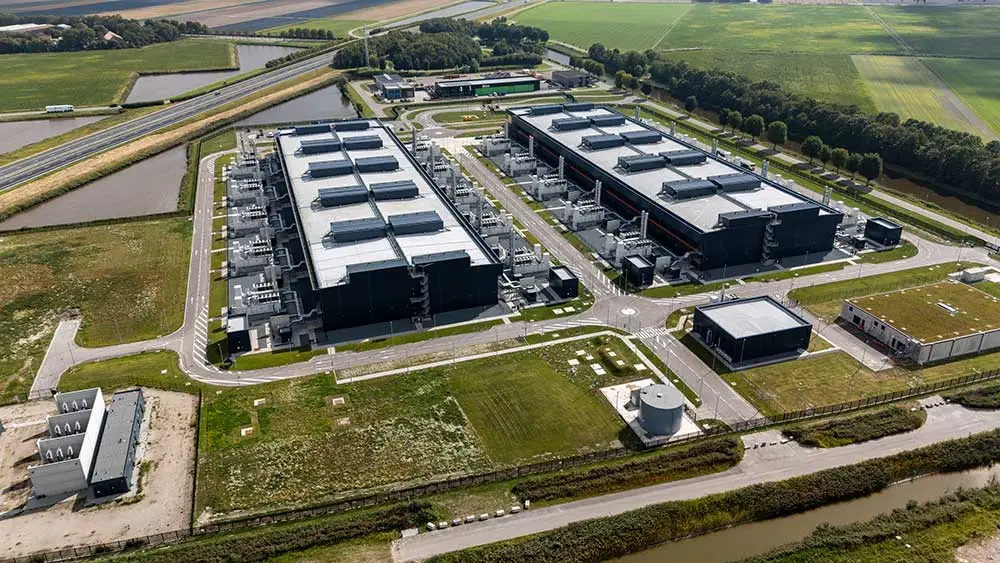
When someone pays for a subscription to store files, photos, or business data “in the cloud,” they are not storing anything in the sky. As Amazon Web Services explains, cloud storage means data is redundantly stored on multiple devices across one or more physical data centers. The cloud is simply someone else’s building, a warehouse of servers humming away in a specific location, on a specific piece of ground, drawing large amounts of electricity and water to keep running.
Data centers are not new. TRG Datacenters traces its history to the 1950s and 1960s, when early computing systems were enormous, requiring dedicated rooms with specialized cooling and power, accessible only to governments, universities, and large corporations. The internet boom of the 1990s turned them into an industry. The arrival of AI at commercial scale has triggered a construction boom unlike anything seen before.
Think of it this way: for older generations, an appraiser kept knowledge in two places, their own experience (in their memory) and a physical paper file. Comparable sales in a filing cabinet. Work files in a drawer. Notes from the field in a folder. The information lived close to the professional. Cloud storage and AI changed that model. Now that information lives on a server in a data center, and someone is paying a monthly subscription to keep it there. The more AI processes there are, the more computing infrastructure is required. And that infrastructure lives on land.
The Pacific Northwest and the Columbia River
The story of where data centers settled first is instructive. Beginning in the mid-2000s, tech companies identified Central Washington and the Oregon side of the Columbia River as ideal locations. As GovTech reported, the region offered low-cost, reliable hydroelectric power from the Columbia Basin’s network of dams, combined with a cool climate that reduces cooling costs year-round.
Quincy, Washington, a small farming community in Grant County known for potato production, became one of the most concentrated examples of this shift. OPB and KUOW report that Microsoft has been building data centers in Quincy for about 20 years, and though each facility employs 50 or fewer, the aggregate has become a substantial job creator, funding a state-of-the-art high school and hospital visible to residents today. In Oregon, Google established one of its flagship campuses in The Dalles along the Columbia River. As Stanford’s & the West documented, at the facility’s opening, the owners were presented with beans from the last crop harvested on the site.
That detail is not incidental. It is a precise illustration of agricultural land being converted into technology infrastructure, and the landowners and communities involved in those decisions needed professionals who understood both what the land had been and what it was becoming.
The resource constraints now emerging from the Pacific Northwest concentration are redirecting development interest. Cornell University researchers identify the Midwest and Great Plains as regions offering the most favorable combined energy and water profile for the next generation of data center construction. Agricultural land long valued for its productivity is being evaluated through an entirely new lens, one that weighs proximity to water sources, transmission infrastructure, and land conversion potential alongside soil quality and crop history. For agricultural appraisers, this is not a peripheral trend. It is a direct market force that demands the same rigor in market analysis as any other land-use shift. In an adjacent longstanding trend, there are landowners or trusts that hold conservation easements or restricted development rights to fend off data center and other development, which also require appraiser valuation.
The Appraiser as Conductor
The most useful way to understand how AI and appraisal practice fit together is through the metaphor of an orchestra. The appraiser is the conductor, the one who understands the full composition, interprets what the music should convey, and holds responsibility for the performance. AI tools and agents are the instrument holders: capable, precise, and indispensable to the production, but without the conductor’s score, they produce only noise.
The conductor does not play every instrument. The conductor helps write the music, sets the tempo, and ensures every section serves the whole. That is precisely what a credentialed appraiser does: designs the analytical framework, selects and weights the data, reconciles the range of value indications, and delivers a conclusion that the client, the court, or the lender can rely on.
Jeff Bradford, CEO of Bradford Technologies, captured this plainly in Working RE: appraisers are the architects of the valuation, AI is the assistant that helps carry the load. Roy Meyer, international speaker, AI strategist, and recognized authority on AI adoption in appraisal practice with more than 35 years in the profession, reinforced this point at the 2025 ASFMRA Annual Conference in Clearwater, Florida. His position is clear: there is not a single area of appraisal practice where AI cannot offer some assistance, but the analysis, the judgment, and the final value conclusion always stay with the appraiser.
Jim Amorin, MAI, SRA, AI-GRS, CAE, ASA, author of The Generative Shift: Preparing Appraisers for Artificial Intelligence Models like ChatGPT, presented on operationalizing AI in rural valuation. His published work in the 2025 ASFMRA Journal stated directly: AI is not about replacing appraisers but empowering them by automating routine tasks, refining data analysis, and uncovering deeper market trends that would be difficult to detect using conventional methods. Appraisers must ensure AI is used transparently and in compliance with regulatory frameworks such as USPAP. Human judgment remains irreplaceable.
The conductor cannot be automated. The instruments can be upgraded.
Where Complexity Demands the Credentialed Appraiser
As the appraisal problems become more complex and the value at stake increases, the credentialed and licensed appraiser who signs the report becomes not less important, but essential.
When an assignment involves an estate with multiple parcels, partial-interest transfers, conservation easements, potential land-use conversion, or significant acreage in a thin or shifting market, the opinion of value carries legal, financial, and tax consequences that no algorithm can be held accountable for. Only a signed, compliant report developed with professional independence will withstand IRS scrutiny, estate litigation, or lender review.
The impact radiates far beyond the appraisal itself. Estate attorneys, CPAs, lenders, and farm families making generational ownership transitions all build decisions on the credibility of that report, sometimes for decades after the fact. AI can make the appraiser faster and better prepared. It cannot make the appraiser unnecessary.
The Sandbox: Compliance Is Not Optional
A well-governed AI platform operates within a defined, contained workspace. Client data is not exposed to unauthorized parties, not used to train public models, and not accessible outside the scope of the engagement. The principle is the same as in any other compliant professional software environment: USPAP confidentiality requirements, SOC 2 security certification, and verifiable data-handling practices must apply whether the tool is a comp database, a mapping platform, or an AI research assistant.
The due diligence questions are straightforward: Is the platform USPAP-compliant? SOC 2 certified? Does it clearly define how client data is stored and protected? These questions have verifiable answers, and platforms that cannot provide them clearly should not be in the workflow.
A Historical Parallel Worth Remembering
There was a time when appraisal reports were typed on manual typewriters, comparable sales were tracked in handwritten ledgers, and market data was assembled through phone calls and courthouse visits. Those who adapted to computers, digital databases, and spreadsheet-based analysis applied their professional standards more efficiently and more thoroughly. Those who did not found themselves producing work that was slower, less defensible, and increasingly out of step with client expectations.
The same dynamic is unfolding now. Within Peoples Company, platforms like FarmWorth bring together parcel data, soil overlays, aerial maps, crop history, and transaction records in a single integrated environment. AI tools that improve how that data is assembled at the research stage make the analysis that follows, comparable selection, market trend interpretation, and value conclusion, stronger and better supported.
The Bottom Line
The land and the information surrounding it may be relatively constant on any given day. The soils, boundaries, and recorded legal descriptions do not change easily. But the tools available to analyze that information are evolving rapidly, and as professionals, we have an obligation to keep pace. Not because the standard demands new technology, but because the standard demands credible, well-supported analysis, and the best available tools are part of how we deliver it.
The appraiser who writes the score, analyzes the sales, interprets the market, reconciles the evidence, conducts the performance, and signs the report remains the professional on whom the entire process depends. That will not change regardless of how sophisticated the tools and instruments become, or where that information is stored.
Emily Oberbroeckling, ARA, is a Certified General Appraiser with Peoples Company’s Appraisal division, specializing in agricultural real estate valuation across the US.
Further Reading
What Is Cloud Storage? — Amazon Web Services
History of Data Centers: From 1950s Server Rooms to AI-Driven Powerhouses — TRG Datacenters (2025)
Data Center Power Needs Could Strain Pacific Northwest Grid — GovTech / Seattle Times (2024)
A Small Town in Central Washington Is Microsoft’s Answer to the Data Center Backlash — OPB / KUOW (2026)
Thirsty for Power and Water, AI-Crunching Data Centers Sprout Across the West — Stanford / & the West (2025)
Roadmap Shows the Environmental Impact of AI Data Center Boom — Cornell Chronicle (2025)
Artificial Intelligence: Friend or Foe of Appraisers? — Working RE (2026)
Cultivating Precision: Integrating Generative AI into Rural and Agricultural Property Valuation — Journal of the ASFMRA (2025)