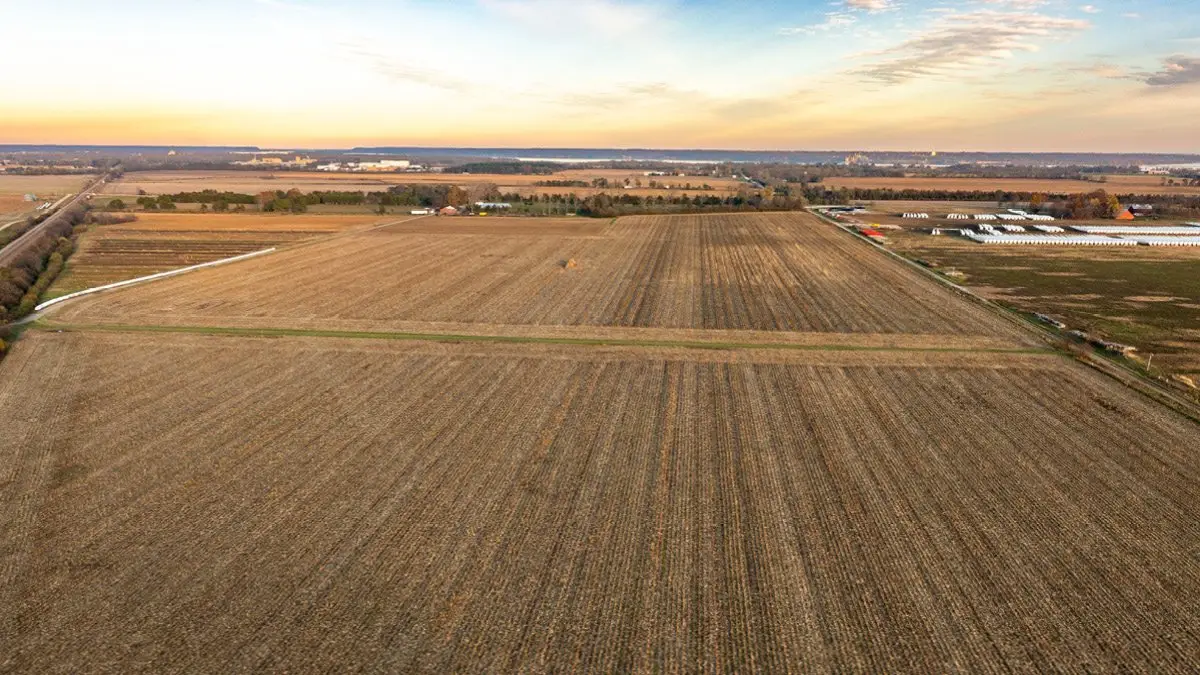
Iowa farmland values are influenced by a wide range of factors, many of which extend well beyond simple price per acre comparisons or CSR2 (Corn Suitability Rating). While soil productivity remains an important component of value, buyers in today’s market evaluate farmland based on a combination of location, soil productivity, drainage, topography, operational efficiency, economic conditions, recreational appeal, tract size, improvements, long term investment potential, and overall utility.
As a result, two farms with similar CSR2 ratings located within the same county can still sell for dramatically different prices. Understanding what drives these differences is important for landowners, investors, lenders, and families involved in estate planning or ownership transition decisions.
Location
Location is often one of the most significant drivers of farmland value in Iowa. Similar quality farms can sell for substantially different prices depending on the local market surrounding the property. In some areas, strong local operators competing for acres continue to support aggressive land values. In other areas, proximity to grain markets, ethanol plants, feed demand, or strong tenant bases can positively influence buyer demand and long-term investment appeal.
Location also becomes increasingly important in areas experiencing transitional pressure near expanding communities, major infrastructure, or competing non-agricultural land uses. In these markets, buyers may place value on factors beyond strictly agricultural utility.
Soil Productivity
Soil productivity continues to be one of the primary drivers of Iowa farmland values. In many areas, buyers place significant weight on CSR2 or Corn Suitability Ratings, soil consistency, and overall crop production capability when evaluating a property.
Higher quality soils generally support stronger yields and greater income-producing potential over time. However, buyers rarely focus solely on the average CSR2 rating. Soil consistency across the tract, slope characteristics, erosion potential, and overall utility can all influence how the market reacts to a farm.
Drainage & Topography
Drainage remains one of the most important physical characteristics affecting agricultural land values throughout Iowa. Farms with good natural drainage, well-maintained tile systems, adequate surface drainage, and limited ponding issues are often viewed more favorably by buyers and operators.
Topography also plays a significant role. Level to gently rolling farms with efficient field conditions are generally easier and less expensive to operate than farms with steep slopes, terraces, waterways, or irregular terrain. In many cases, operational efficiency directly impacts both profitability and buyer demand.
Farmability & Field Efficiency
Field efficiency can also have a significant impact on value. Buyers often consider:
Highly efficient farms may require less time, labor, and fuel to operate, making them more attractive to both operators and investors.
Commodity Prices, Input Costs & Interest Rates
Broader economic conditions continue to influence agricultural land markets throughout Iowa. While commodity prices remain an important factor, profitability is ultimately influenced by a combination of crop prices, input costs, and borrowing conditions.
In addition to grain prices, buyers and operators closely monitor expenses such as seed, fertilizer, chemical, fuel, machinery, cash rent/land cost, labor, and equipment costs when evaluating farm profitability and long-term purchasing decisions. Strong commodity prices may support land demand, but rising operating costs can offset a portion of that benefit and impact overall margins.
Interest rates also continue to play a significant role in the agricultural land market. Borrowing costs directly affect purchasing power and can influence how aggressively buyers are willing to compete for farmland. Periods of stronger farm income and lower interest rates have historically supported stronger farmland demand, while tighter margins and higher borrowing costs can place pressure on market activity.
From an appraisal standpoint, changing economic conditions are an important consideration during the valuation process. Appraisers monitor overall market trends and place significant emphasis on recent comparable sales to ensure the analysis reflects current market conditions as closely as possible. In periods of changing markets, older sales may require additional analysis to determine whether they continue to reflect current buyer behavior and market expectations.
Recreational Influence
In some areas of Iowa, recreational demand has become an increasingly important contributor to value. Farms with strong hunting opportunities, timber, water features, or quality wildlife habitat may attract recreational buyers in addition to traditional agricultural operators. In certain markets, these recreational influences can contribute significantly to overall value and buyer demand.
Tract Size & Buyer Pool
The size of a farm can also influence both value and marketability. Smaller tracts often attract a broader buyer pool that may include local operators, investors, recreational buyers, and rural acreage purchasers.
Larger tracts are often highly desirable for large operators and investors due to operational efficiency and the ability to add scale to an existing operation. However, the larger capital requirements associated with acquisition can limit the overall buyer pool in some markets.
Improvements & Infrastructure
Improvements such as grain storage, machine sheds, livestock facilities, and other agricultural infrastructure can also influence value when they contribute meaningful utility to the property.
However, not all improvements contribute equally. Age, condition, functionality, and overall market appeal all influence how buyers react to agricultural improvements.
Conclusion - Why Credible Valuation Matters
While all of these factors influence farmland values, no two farms are viewed exactly the same by the market. Buyers may prioritize different characteristics depending on their operational needs, investment goals, recreational interests, or long-term plans for the property.
Iowa farmland values continue to be influenced by a combination of location, agricultural fundamentals, local market dynamics, operational efficiency, and broader economic conditions. While some factors may be more visible than others, the interaction of these characteristics ultimately influences how the market responds to an individual property.
Understanding these factors helps explain why farmland values can vary significantly from one property to another, even when farms appear similar on paper.
As a result, accurately analyzing farmland value requires more than relying on average price-per-acre figures or simple CSR2 formulas. A credible appraisal analyzes how the market reacts to all relevant property characteristics collectively, including location, productivity, drainage, utility, market conditions, and comparable sales activity.
This becomes especially important during estate planning, farm succession, financing decisions, partnership dissolutions, litigation, or property acquisitions where a credible and well-supported valuation is necessary for informed decision-making.
Lucas Riesenberg is a Certified General Appraiser with Peoples Company specializing in agricultural and rural property valuations across Iowa. If you have questions regarding farmland valuation or agricultural appraisals in Iowa, Lucas can be reached at [email protected].