

Prevented Planting and Final Plant Dates for Corn and Soybeans
Spring weather can turn planting decisions into risk-management decisions quickly. Final planting dates, late-planting reductions, and prevented planting provisions can affect revenue protection, cropping plans and farm management strategy. This quick reference outlines how these provisions generally apply to Midwest corn and soybeans when weather delays timely planting.
My perspective on this topic is rooted in firsthand experience. I grew up in south-central Iowa near the Missouri border, where our family farmed bottom ground along the Weldon River and Caleb Creek. For years, my dad handled planting, and after he passed away in 1992, my oldest brother stepped into that role. We ran a 12-row planter until about 2014, when he moved to a 16-row planter. Even with capable equipment, planting windows could close quickly. In our area, smaller fields, scattered tracts, water crossings and travel time between farms reduced the number of productive planting hours. Those realities are a practical reminder that final planting dates are more than program deadlines. They are decision points that can materially affect risk, revenue, and next steps.
The 1993 flood year remains one of the clearest examples of how quickly a season can change. Water covered soybean ground and nearby roads, and the conversation shifted from whether acres could be planted to whether conditions, deadlines, and policy terms would support prevented planting. In years like that, timing, documentation, and communication matter, and so does a clear understanding of how coverage may respond. That is why these provisions deserve close attention from producers, landowners, tenants, managers, and advisors alike.
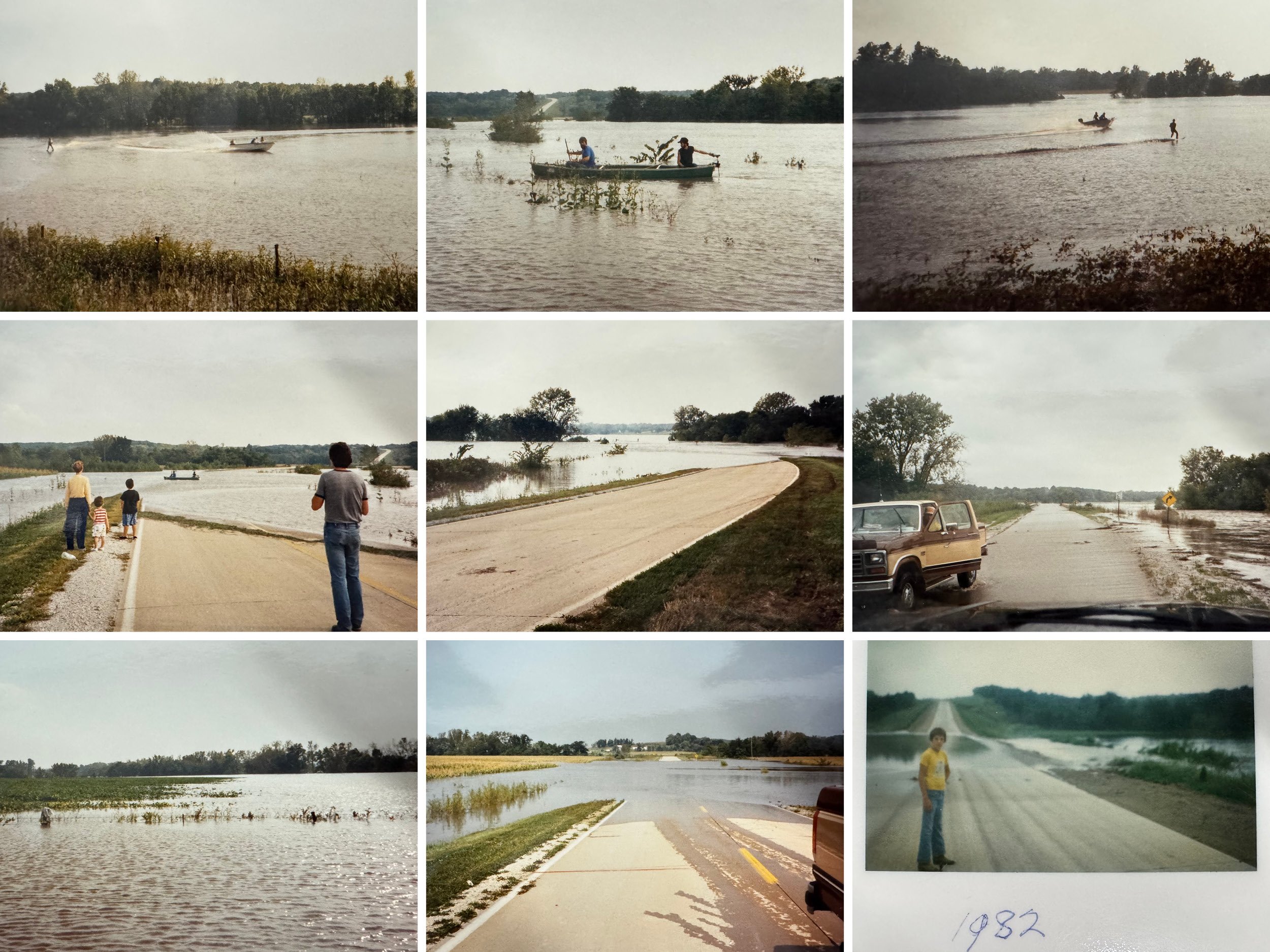
Flood of 1993, west of Lineville, IA—when soybean fields turned into waterways and neighbors made the best of it, even water‑skiing down what used to be dry land (with one throwback to the ’82 flood for perspective).
What is prevented planting coverage?
Prevented planting coverage is designed to help protect producers when an insured cause of loss prevents planting by the final planting date or during the late-planting period. In practical terms, it helps offset a portion of the pre-planting costs already invested before the crop could be planted.
Prevented planting payments are typically calculated as a percentage of the insurance guarantee the producer would have had on a timely planted crop. For example, if the insurance guarantee is $100 per acre and the prevented planting factor is 60%, the prevented planting payment would be $60 per acre.
Does prevented planting cover the crop value or only pre-planting costs?
Prevented planting is intended to cover a portion of pre-planting costs already incurred, not the full value of a crop that was never planted. Depending on the operation, those costs may include machinery, land rent, fertilizer, crop protection, labor, repairs, and field preparation. The applicable percentage varies by crop and policy terms.
As deadlines approach, early communication is important. Producers, landowners, tenants, and advisors should review county-specific dates, discuss realistic planting scenarios, confirm documentation requirements, and stay aligned on notice obligations before making final decisions.
Key Takeaways
Final planting dates vary by crop and county and directly affect how much of the insurance guarantee remains protected.
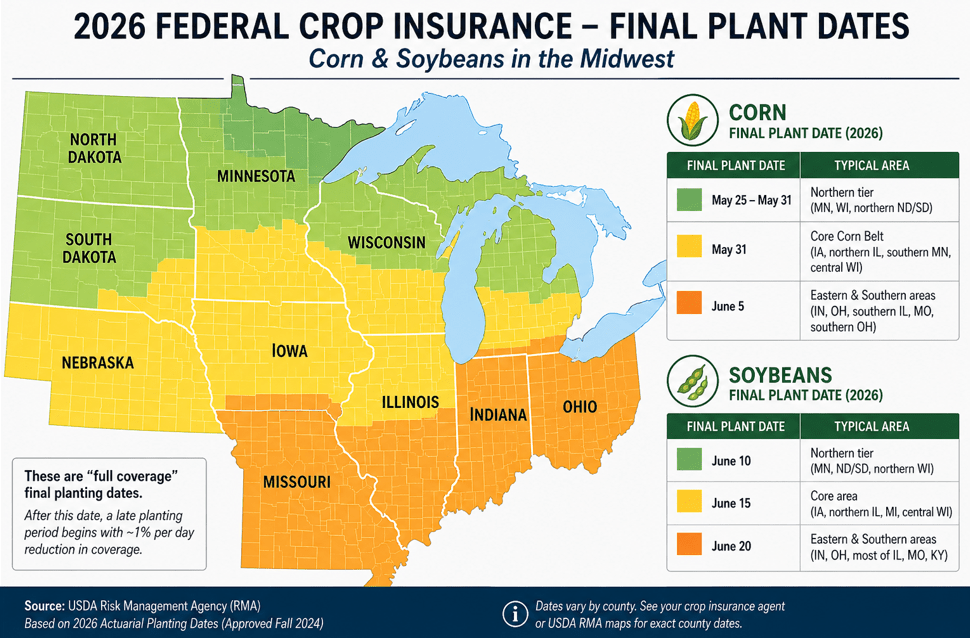
Planting after the final planting date is often still allowed, but the insurance guarantee is generally reduced by 1% per day during the late-planting period, up to 25 days.
Prevented planting is intended to help cover pre-planting costs when an insured cause of loss keeps acres from being planted on time.
Prevented planting eligibility is fact-specific, which makes timely communication, field documentation, and notice requirements especially important.
The map below provides a county-by-county reference for federal crop insurance final planting dates for corn and soybeans.
General Prevented Planting Eligibility Considerations
To qualify for prevented planting, producers generally must meet the following provisions, although additional requirements may apply based on the policy, crop, and county.
It must be after the final planting date for the applicable crop and county, and the inability to plant must result from an insured cause of loss.
The producer must have intended to plant the crop, which may be supported by purchased inputs, field preparation, and normal crop rotation practices.
The cause of loss must generally affect the surrounding area, not just a single isolated field or farm.
Excessive moisture and flooding are among the most common causes of prevented planting claims.
Drought or dry conditions may qualify only in limited situations. In many cases, producers are expected to plant when conditions allow and rely on yield or revenue coverage if the crop later suffers a loss.
Notice requirements are critical. Producers should contact their crop insurance agent as soon as they believe acres may qualify and before making planting or replanting decisions.
Prevented planting provisions may allow a cover crop and, under certain guidelines, haying or grazing, but those rules can vary. Confirm details with your crop insurance agent before taking action.
How Prevented Planting Payments Are Commonly Calculated
Corn: Prevented planting is commonly 55% of the insured revenue guarantee. Example: 200 APH × $4.62 spring price × 80% coverage = $739 per acre guarantee; $739 × 55% = $406 per acre prevented planting payment.
Soybeans: Prevented planting is commonly 60% of the insured revenue guarantee, subject to the policy terms in effect for the crop and county.
Summary
Final planting dates and prevented planting provisions are important risk-management guideposts in a wet or delayed spring. Late planting can reduce the insurance guarantee, while prevented planting may apply when an insured cause of loss keeps acres from being planted on time. For producers, landowners, and agricultural professionals, understanding those rules can support better decisions around cropping plans, lease discussions, documentation, and next steps.
Because crop insurance rules can vary by county, crop, unit structure, and policy election, small timing details can have a meaningful impact on eligibility and coverage. If you are evaluating final planting dates, late-planting reductions, or prevented planting scenarios, Peoples Company’s Land Management and Crop Insurance teams can help you assess the situation, understand the variables, and determine the most informed path forward. If you would like more information please contact us at 855.800.LAND or [email protected].
Agriculture
Crop Insurance
Energy Management
Growing Together
Industry Insights
Land Auctions
Land Management
Land Values
News & Events
Real Estate


Peoples Company proactively works to anticipate the needs of those in the agricultural sector. Our monthly email publication keeps readers in the know about everything land.
