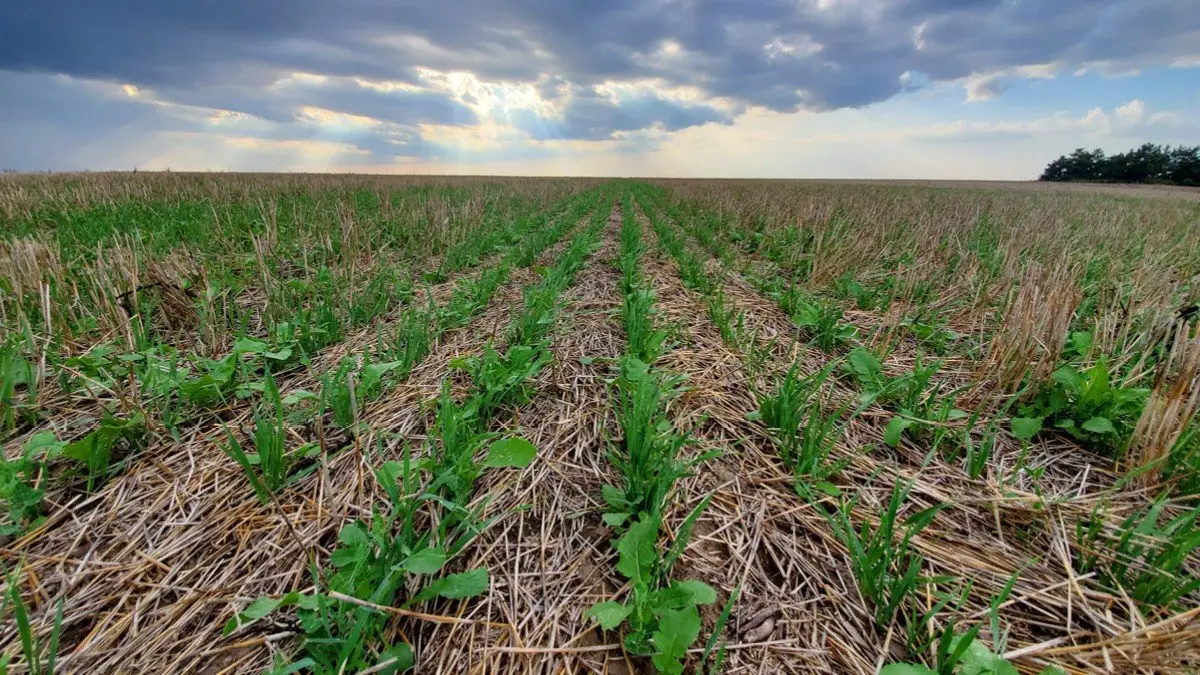
With the implementation of the 45Z Clean Fuel Production Tax Credit, many producers are wondering whether planting cover crops this fall could lead to a premium for low-carbon-intensity (CI) corn that offsets the additional cost of establishing a cover crop.
The 45Z tax credit is a federal incentive available to clean fuel producers that use low-carbon feedstocks to manufacture transportation fuels. The credit can provide up to $1.00 per gallon for qualifying clean transportation fuels and up to $1.75 per gallon for sustainable aviation fuel produced with low-CI feedstocks.
On average, one bushel of corn can produce approximately 2.9 gallons of ethanol. The 45Z tax credit is currently scheduled to run from January 1, 2025, through December 31, 2029.
What Is a Cover Crop?
A cover crop is planted to protect the soil from erosion and improve overall soil health. Cover crops can be established in several ways, including aerial application into a standing crop before harvest, high-clearance seeding later in the growing season, or drilling and broadcasting after harvest.
One of the most common and cost-effective cover crops is cereal rye. Unlike some other species, cereal rye survives the winter and resumes growth in the spring, allowing it to provide additional erosion control, nutrient scavenging, and soil health benefits before termination and planting of the next cash crop.
Oats can be an effective choice when seeded early and typically winter-kill, eliminating the need for spring termination. Additional species such as turnips, radishes, peas, clovers, and diverse cover crop mixes can help improve soil structure, increase organic matter, enhance water infiltration, and support overall soil health.
Cover crops are commonly planted before or after the harvest of a cash crop such as corn or soybeans, with species selection and timing depending on management goals, field conditions, and available planting windows.
How Do Cover Crops Lower CI Scores?
Cover crops lower carbon intensity scores by capturing atmospheric carbon through their living root systems and storing it in the soil. The degree of impact varies based on factors such as weather, planting date, soil conditions, and overall crop growth.
Using the current GREET model, a cover crop may reduce a corn producer's CI score by approximately 5 to 10 points.
To calculate carbon intensity, the U.S. Department of Energy utilizes the GREET model to measure the carbon footprint of feedstocks used in clean fuel production. In general, the lower the CI score of a fuel, the greater the potential tax credit available to the fuel producer.
Whether ethanol plants ultimately pay premiums for low-CI corn will depend on several factors, including their current CI score, location, access to carbon capture and sequestration infrastructure, and overall compliance strategy. An ethanol plant already connected to a carbon capture pipeline, for example, may have less incentive to purchase low-CI corn if it can already maximize available tax credit benefits through other means.
What Does This Mean for Corn Producers?
Because every ethanol plant operates under different circumstances, producers should communicate directly with local ethanol plants to determine whether premiums will be offered for low-CI corn.
For producers raising low-CI corn, it may be beneficial to compare opportunities among multiple end users.
While some facilities may be willing to share a portion of the value generated by the 45Z credit, others may be hesitant to assume the financial and compliance risks associated with verifying CI reductions. Ethanol plants will ultimately need confidence that the corn they purchase meaningfully improves their overall CI score enough to generate additional tax credit value.
For producers considering cover crops, it may make sense to start with a limited number of acres while monitoring market developments. In addition to the potential for future premiums, several public and private cost-share programs may help offset establishment expenses.
Understanding the Potential Value
To understand why ethanol plants are interested in lowering carbon intensity, it helps to look at the scale of ethanol production from corn.
Assuming a corn yield of 180 bushels per acre and an ethanol conversion rate of approximately 2.9 gallons per bushel, one acre of corn can produce roughly 522 gallons of ethanol:
180 bushels per acre × 2.9 gallons per bushel = 522 gallons of ethanol per acre
Because the 45Z tax credit is awarded on a per-gallon basis and tied to the lifecycle carbon intensity of the fuel, even modest reductions in carbon intensity can create meaningful value for ethanol producers. The exact credit amount depends on the fuel's emissions profile and other program requirements, not simply the volume of corn processed. The credit is also paid directly to the clean fuel producer, not the farmer.
Positioning for Emerging Low-CI Corn Markets
The market for low-carbon-intensity corn continues to evolve, and premium opportunities tied to the 45Z tax credit are likely to vary by ethanol plant, geography, and verification requirements.
Peoples Company Land Management team can help producers and landowners evaluate cover crop adoption, identify available cost-share opportunities, monitor local market developments, and assess the potential economic impact on their operation. As carbon programs and low-CI grain markets continue to develop, staying informed will be critical to making sound management decisions.