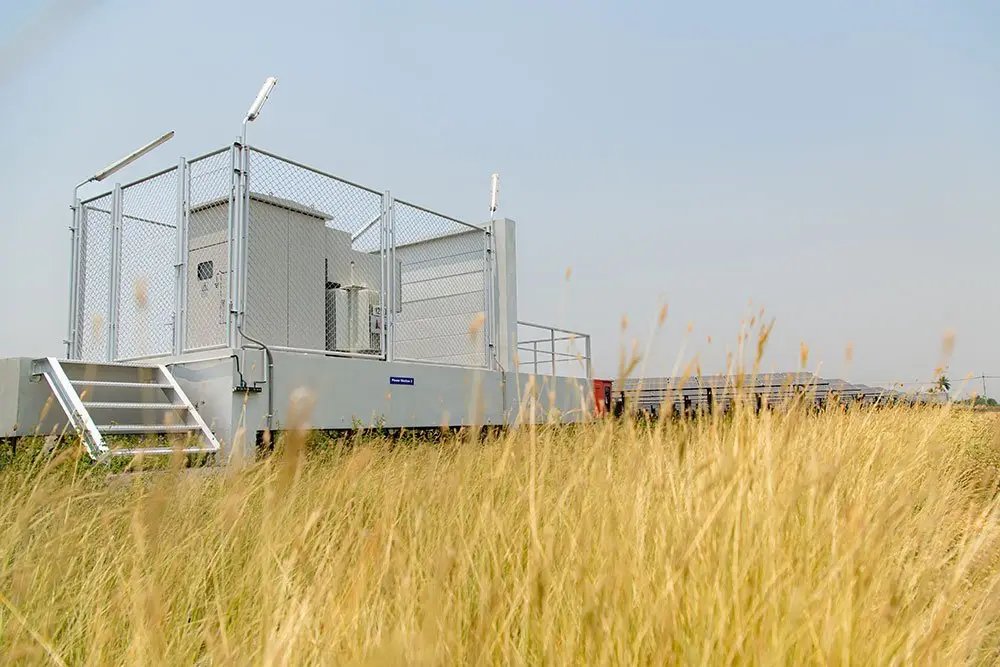
Battery energy storage has become an increasingly familiar part of Illinois' energy landscape over the past several years. While much of the industry's early growth focused on larger utility-scale projects, developers are now showing increasing interest in small battery sites that can be developed on one acre or less.
For landowners, this shift is significant. Many of these projects require only a small footprint, creating opportunities to generate long-term lease income with minimal impact on productive farmland.
A New Market for Illinois Landowners
Battery energy storage systems store electricity when energy is plentiful and release it back to the grid when demand is highest. These facilities help improve grid reliability, support renewable energy generation, and provide additional flexibility to utilities and grid operators.
For landowners, battery storage represents a different type of energy development opportunity. Rather than requiring large tracts of land, developers are often searching for relatively small sites that offer access to the electric grid.
The Policy Changes Behind the Demand
The growing interest in battery storage did not happen by accident. It is the result of major changes in Illinois energy policy and the state's increasing need for reliable electric infrastructure.
As additional wind and solar generation comes online, the need for stored energy has become increasingly important. Battery storage allows electricity generated during periods of high production to be used later when demand is greater, helping balance the grid and improve reliability.
A significant catalyst for the market was Senate Bill 25, also known as the Clean and Reliable Grid Affordability Act, signed into law on January 8, 2026. The legislation directed the Illinois Power Agency to procure up to 3,000 megawatts of energy storage resources by 2030 and established programs designed to encourage battery storage development throughout Illinois.
The legislation also established a more predictable framework for battery storage development, giving developers and investors greater confidence to pursue projects across the state. As a result, companies are actively searching for locations that can provide access to the electric grid before the most desirable interconnection opportunities are secured.
Another notable trend is that developers are no longer focused exclusively on large utility-scale battery facilities. Increasingly, companies are evaluating smaller distributed storage opportunities located near substations and distribution infrastructure. As competition for viable interconnection locations continues to increase, developers are expanding their search beyond traditional large-scale sites and pursuing smaller projects that can still provide efficient access to the electrical grid. This shift has expanded the pool of potential landowners who may benefit from battery storage development, as a property no longer needs dozens of available acres to attract interest.
Why Location Matters More Than Acreage
For battery storage projects, especially the growing number of small-scale and distributed battery facilities being proposed in Illinois, location is often far more important than size.
A one-acre site adjacent to a substation may be significantly more valuable to a developer than a 100-acre tract with no practical interconnection opportunity. Developers are generally looking for properties that can efficiently connect to the electric grid, and the quality of that connection frequently matters more than the number of acres available.
Developers typically seek properties near:
Electrical substations
Transmission lines
Three-phase distribution lines
Existing utility corridors
Areas with available interconnection capacity
Preserving Tillable Acres While Generating Lease Income
For many Illinois farmers, this may be the most compelling aspect of battery storage development.
Unlike many forms of land development, small battery sites typically require little acreage. Using a small corner of a farm, landowners can create an additional source of long-term income while preserving nearly every productive acre.
In an era when farm margins can fluctuate dramatically, the ability to generate lease revenue from a site that may represent less than one percent of a property's total acreage is an attractive proposition. For many families, battery storage offers a way to diversify farm income without materially changing the operation itself.
What Makes a Site Viable
Not every property is a candidate for battery storage development. In general, developers prefer sites that:
Are located near a substation
Have access to three-phase power
Offer year-round road access
Have relatively flat topography
Are outside major flood-prone areas
Can accommodate a modest equipment footprint
Currently, many of the opportunities for battery storage development are emerging in portions of northern Illinois and central Illinois where transmission and substation infrastructure offer access to the electrical grid.
The Race for Interconnection Capacity
One of the reasons developers are moving aggressively today is that interconnection opportunities are limited.
While Illinois has established ambitious energy storage goals, not every substation has adequate capacity to support new projects. Once a developer secures a favorable interconnection location, competing developers may find it difficult or impossible to utilize the same electrical infrastructure.
For landowners, this means timing matters. Properties located near desirable electrical infrastructure may receive increased attention as developers seek to secure project sites before the best interconnection opportunities are exhausted.
Evaluating Your Property
Landowners interested in exploring the opportunity should begin by determining whether their property has access to nearby electrical infrastructure and potential interconnection opportunities.
If a property appears viable, the next steps may include speaking with developers, working with experienced land professionals, and evaluating lease terms carefully. Because lease agreements can remain in effect for decades, professional review of any proposed agreement is highly recommended.
Looking Ahead
Battery storage is becoming an increasingly important part of Illinois' energy future. Driven by growing electricity demand, renewable energy expansion, and policy initiatives, developers are actively searching for locations capable of supporting the next generation of energy infrastructure.
As competition for interconnection capacity increases, property owners who control land near substations, transmission lines, and other key pieces of electrical infrastructure may find themselves holding a uniquely valuable asset.
For landowners, the opportunity is simple: a small site in the right location may create long-term income while preserving virtually all of a property's productive acreage.
If you would like to learn whether your property may be suitable for a battery storage project, contact the Peoples Company Energy Management Team to discuss your land and explore potential opportunities.