Live Auction TODAY at 10:00 AM CT | 266.24 Acres M/L in Columbia County WI | WATCH

/ Blog

Stressed Farmland Assets: Past Performance Isn’t the Future
November 10, 2026   -   Harrison Freeland
Share

You may have heard this disclaimer at the end of a commercial advertising a financial product, or seen it in fine print at the bottom of each page with historical returns in a presentation about a financial product. I know I have seen it in pretty much every farmland investment presentation I have reviewed.  Almost always the historical returns it is a disclaimer for are positive. However, I’m here to point out that it is also a useful disclaimer in the inverse.  

As Special Assets Advisor at People’s Company I focus on more unique projects and often times stressed situations and assets.  The first project I worked on in a professional capacity was a 10,000-acre tomato grower, packer, processor and distributor that was in bankruptcy.  I have since completed sales of citrus groves, nut orchards, vineyards, dairies, greenhouses, vegetable farms, corn and soybean farms, and even a few grocery stores that were in stressed situations.  Many of these projects had things in common, but they were all unique in their own way.  Perhaps the way they were most different from each other is how the purchases worked out for the buyer.  While all of these assets were sold from stressed situations including many out of bankruptcy, their past “negative” performance was not always indicative of their future performance.   Sure, there have been assets I have sold that put their new owner right into the shoes of the previous owner.  Usually in these cases there was a broad shift in a market or major change impacting ability to grow a specific crop.  We saw both of these happen to the citrus industry in Florida with a change in demand as more beverage choices became available and the introduction of the Asian citrus psyllid.  If you were a buyer of a stressed orange grove in Florida in a post 2005 world it was not a good purchase.  That is until it was and solar caused land values to increase. 

There are industries where we tend to see cycles such as the dairy industry where bankruptcies come in waves in bad years but see rallies in value just as often.  When evaluating a distressed or stressed farmland / agricultural asset as a purchaser the best advice I can give is to evaluate it as you would any other farmland / agricultural investment.  Don’t let the words “foreclosure sale” or “bankruptcy auction” dissuade you from checking under the hood or kicking the tires on a property that fits your investment thesis.  In 2016 I was part of a team that sold almost 1,000 acres of premium Sangamon County farmland in Central Illinois.  While the owner / operator of the farmland was in a stressed situation we made sure the market of potential purchasers didn’t see the sale that way.  We had an amazing sale with over 100 registered bidders in the room and online for that auction and we broke $14,000/acre on the best tract (first sale I was a part of to hit that number).  If you don’t know anything about prime Sangamon County farmland, that seemed like a high price at the time, but you could have sold that farm for more than $20,000/acre seven years later.  Just because the owner/operator was in a stressed situation didn’t mean the underlying asset shouldn’t sell for what the top of the market at that time was.

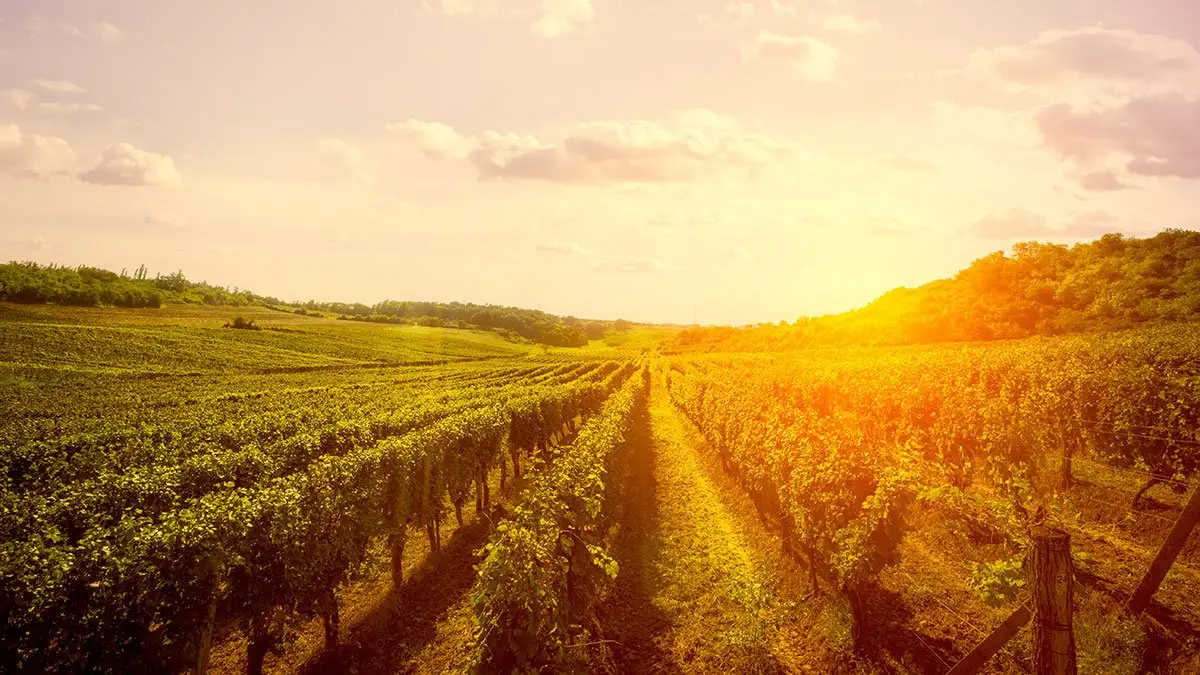
Today we are seeing stress in the wine industry with demand issues among young people and some shifts in older consumers as well with the introduction of GLP-1s.  There was a lot of capital deployed with the assumption that Gen Z would drink wine at a similar rate to those generations before them and we have ended up in a situation where we overplanted for the current demand.  The past and current performance of these investments is not necessarily indicative of future results though. We are already seeing acres fallowed and transitioned to other uses such as row crops.  There is going to be a wine industry that survives, at least I know I’m doing my part to help prop up demand!  No one wants to try to catch a falling knife, but farmland / agriculture investing isn’t equity investing.  The investment timelines are too different to compare apples to Apple. We think in decades not quarters, therefore the question isn’t what the wine industry will look like three months from now, but what will it look like 10 years from now.  And the follow up question should be what and where are the opportunities.